Thinking about a whiter smile? You’ve come to the right place. To get real, safe results, you’ve got two main options: a professional in-clinic treatment or a dentist-approved take-home kit. Both use proven bleaching agents to lift stains and brighten your teeth, but the absolute safest path always begins with a dental consultation to make sure your teeth and gums are healthy enough to start.
Your Journey to a Brighter Smile in New Zealand
Wondering how to bleach your teeth without the guesswork? You’re not alone. Here in New Zealand, wanting a brighter smile has become a normal part of looking after ourselves, not just some luxury cosmetic treatment. It's hardly surprising when you think about how our daily lives—that morning flat white, a glass of red wine, or smoking—can leave their mark.
This guide is designed to be your clear, honest roadmap. We'll cut through the noise and break down the real differences between a professional treatment here at a clinic like Switch Dental and the countless at-home kits you see online or in the chemist aisle.
Understanding the Demand for Whiter Teeth
The growing interest in teeth bleaching isn't just something we hear about; it's a real trend across the country. In fact, the market for teeth whitening systems in New Zealand was valued at over $0.7 million in 2023. This number shows just how much things have changed, especially when you consider that roughly 70% of NZ adults say they feel unhappy with tooth discolouration. This demand has pushed the industry to develop treatments that are safer and more effective than ever before. You can learn more about the growth of teeth whitening systems in NZ.
Your smile is one of your most important features. Choosing the right whitening method isn't just about looks; it’s about making a safe, informed decision for your long-term oral health.
We’re going to cover everything you need to know, starting with the crucial first step of a dental check-up and explaining what the process actually feels like. We’ll also share practical, real-world advice on how to make those dazzling results last, so you can feel confident moving forward. Think of this as your complete guide to achieving that brilliant smile, safely.
What to Do Before Whitening Your Teeth
So you're thinking about whitening your teeth. It’s easy to get caught up in picturing that final, dazzling smile, but hold on a moment. Jumping straight into the bleaching process without the right prep is a recipe for disappointment and can even cause some unnecessary discomfort.
Trust me, laying the proper groundwork is the real secret to getting a safe, even, and stunning result.
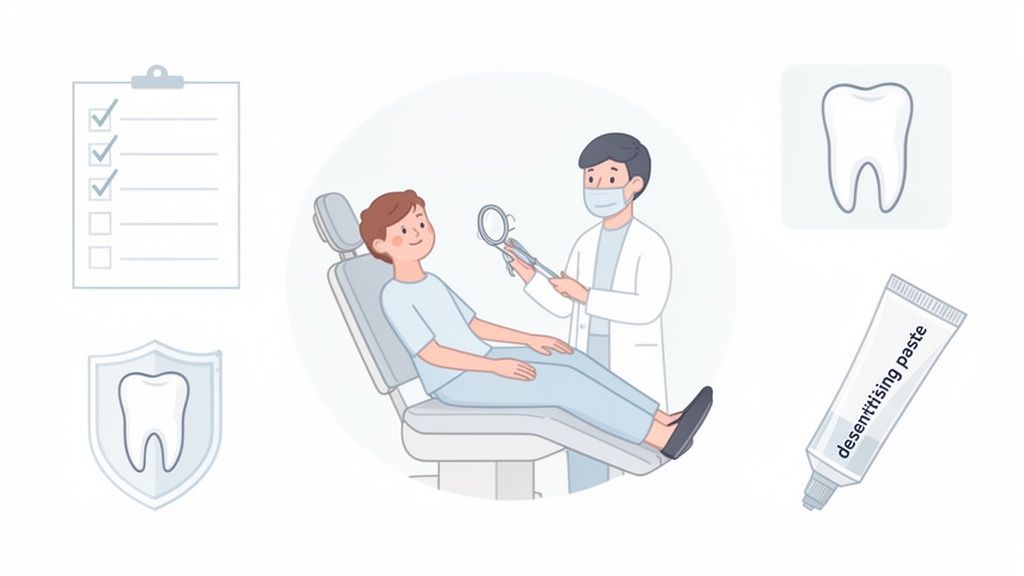
The absolute first thing on your to-do list? A comprehensive dental check-up and clean. This isn't just a friendly suggestion—it’s a non-negotiable safety step. Whitening gels use active ingredients like hydrogen peroxide, and if you apply them over undiagnosed dental issues, you could be in for a world of hurt.
Why a Pre-Whitening Check-up Matters
Before we even think about whitening, we need to be certain your mouth is in great shape. A professional clean is crucial because it buffs away all the surface plaque and tartar, giving the whitening agent a clean canvas to work its magic.
More importantly, though, a thorough examination lets us spot any hidden problems that could turn your whitening experience into a painful one or leave you with a patchy finish.
We're specifically on the lookout for a few key things:
- Cavities or Decay: If bleaching gel seeps into a cavity, it can travel straight to the tooth's nerve. That means serious pain you’ll want to avoid.
- Cracks or Leaky Fillings: Just like cavities, any tiny cracks or gaps around old fillings create a direct path for the gel to irritate the sensitive inner parts of your tooth.
- Gum Health: Your gums need to be healthy. If you’ve got gingivitis or receding gums, the whitening agent can cause major irritation to those sensitive, exposed root surfaces.
To get a clear picture of your oral health, we recommend you learn more about our dental check-ups before starting your whitening journey.
Managing Sensitivity and Existing Dental Work
One of the biggest worries people have about teeth bleaching is sensitivity. It’s a valid concern. The peroxide in whitening agents temporarily makes your enamel a bit more porous, which can expose the sensitive dentin layer underneath. But the good news is this is almost always temporary and completely manageable.
Here’s a pro tip from our clinic: Start using a desensitising toothpaste for a couple of weeks before your treatment. These toothpastes build up your teeth’s resilience by either blocking pain signals or sealing the tiny tubes in your dentin.
Finally, we need to have a frank chat about any dental work you already have. Things like crowns, veneers, and fillings are made from ceramic or composite resin, and these materials will not lighten when you bleach. This means if you whiten your natural teeth, your old dental work can suddenly stand out, looking darker or more yellow by comparison.
It's all about planning. We can work together to create a strategy, which might involve replacing older restorations after you’ve reached your ideal shade, ensuring your entire smile looks seamless and bright.
How Professional In-Chair Bleaching Works
If you want the quickest, most noticeable results, professional in-chair teeth bleaching is the way to go. It’s a carefully controlled procedure that goes far beyond what over-the-counter products can do, giving you a significantly brighter smile in about an hour. Forget the guesswork and patchy results; this is a precise, effective treatment managed by a dental expert.
The entire process is built around two key ideas: safety and potency. Unlike at-home kits, a professional treatment uses a much higher concentration of bleaching agent, which is why it works so fast. But that strength absolutely requires an expert hand to protect your teeth and gums.
Protecting Your Gums and Soft Tissues
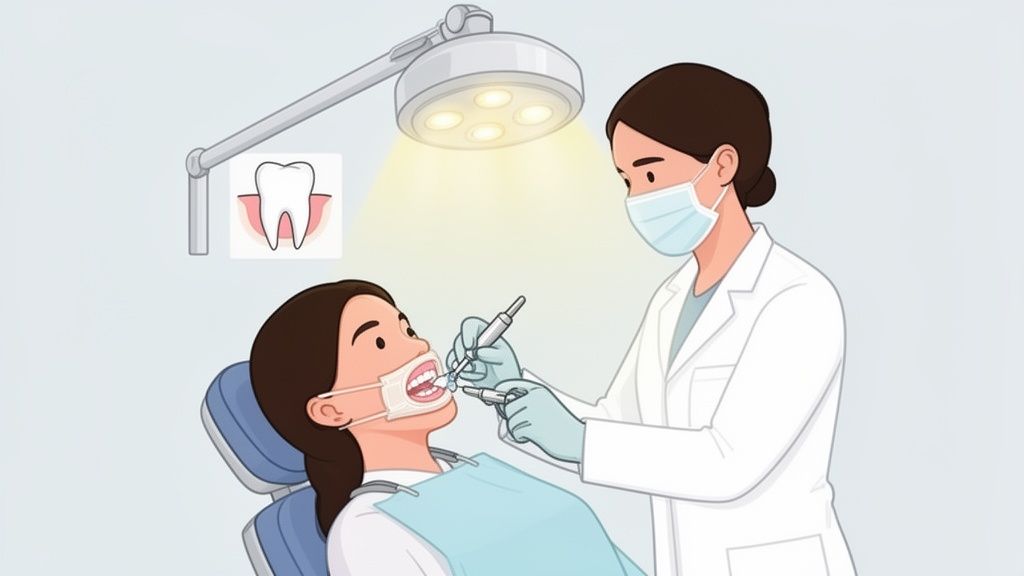
The first thing we always do is isolate your teeth. Before any whitening gel gets near them, your dentist carefully places a protective barrier over your gums and lips. This is often a special resin that we cure with a light to form a secure seal, making sure the powerful bleaching agent only touches your tooth enamel.
This is a critical safety step you just can't replicate at home. It prevents chemical burns and irritation to your sensitive gum tissue, which is what makes such a powerful treatment both safe and comfortable.
Applying and Activating the Whitening Gel
Once your gums are safely covered, the professional-grade whitening gel is meticulously painted onto the surface of each tooth. This gel contains a much higher concentration of hydrogen peroxide than any product you can buy in a shop, allowing it to break down stubborn stains that have built up over years from coffee, tea, or just natural ageing.
To kickstart the process, we often use a special LED light positioned over your teeth. This light activates the hydrogen peroxide, speeding up the stain-lifting action significantly. We typically leave the gel on for about 15-20 minutes at a time, then remove it and reapply it in a few cycles during the same appointment.
A single in-chair whitening session can lighten teeth by several shades, offering an immediate and significant aesthetic improvement. This is why it's a popular choice before major events like weddings or important presentations.
Comparing Your Teeth Whitening Options
It can be tricky to decide which whitening method is right for you. While in-chair bleaching offers the most dramatic and immediate results, other options serve different needs and budgets. Here’s a quick comparison to help you see the key differences.
| Feature | Professional In-Chair Bleaching (e.g., Switch Dental) | Dentist Take-Home Kits | Over-the-Counter Products (Strips, Pens) |
|---|---|---|---|
| Whitening Agent | High-concentration (25-40% hydrogen peroxide) | Moderate-concentration (10-20% carbamide peroxide) | Low-concentration (<10% hydrogen peroxide) |
| Speed of Results | Immediate (in one ~60-minute visit) | Gradual (over 1-2 weeks) | Very gradual (over several weeks) |
| Professional Supervision | Direct supervision by a dentist | Custom-fitted trays, initial dentist guidance | None; self-applied |
| Gum Protection | Full professional barrier applied | Custom trays minimise gum contact | No specific gum protection; can cause irritation |
| Evenness of Results | Very consistent and even | Generally even due to custom trays | Can be patchy or uneven |
| Best For | Fast, dramatic results for a special event or significant discolouration. | Maintaining whiteness or gradual, controlled whitening at home. | Minor touch-ups or very light surface staining. |
Ultimately, the best choice depends on your goals, timeline, and how much discolouration you're dealing with. Professional options offer a level of safety and effectiveness that over-the-counter products just can't match.
Achieving a Consistent and Natural-Looking Result
One of the biggest advantages of getting this done professionally is the even, consistent finish. Your dentist can target specific areas of discolouration and make sure the gel is applied uniformly across every visible tooth surface. This helps avoid the splotchy outcomes that can sometimes happen with ill-fitting whitening strips or one-size-fits-all trays.
After the final cycle, we remove the gel and the protective barriers, and you get to see your new, brighter smile right away. The results are instant and impressive, providing a real confidence boost in a single visit.
It's also worth noting that existing dental work, like crowns or fillings, won't change colour. For those thinking about a complete smile makeover, you might want to find out more about dental veneers as a way to create a perfectly uniform look. This detailed, supervised approach is exactly why in-chair bleaching delivers such reliable and satisfying results.
Choosing a Safe At-Home Whitening Method
If you'd rather brighten your smile from the comfort of your own home, a professional take-home kit from your dentist is hands down the safest and most effective option. It’s easy to be tempted by the promises on those chemist-aisle boxes, but honestly, they just don't hold a candle to a system designed and supervised by a dental professional.
The real magic is in the custom-fitted whitening trays. These aren’t the flimsy, ill-fitting trays you get in a generic kit. We take a precise mould of your teeth to create a set of trays that hugs every single contour of your smile.
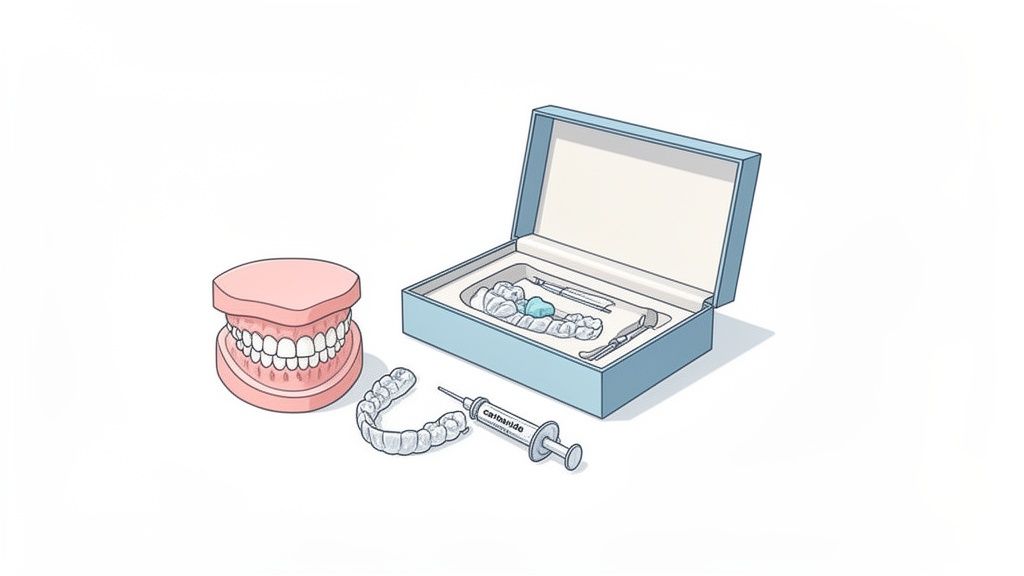
This perfect fit isn’t just about being comfortable. It’s crucial for getting an even, consistent result. The gel makes complete contact with every tooth surface, which means no more patchy or splotchy spots that you often see with store-bought strips. Most importantly, it forms a seal that keeps the bleaching agent locked in and away from your sensitive gums, dramatically reducing the risk of irritation.
The Professional Difference in Gels and Plans
The gel we provide is also a big part of the picture. We typically use a carbamide peroxide gel, which works a bit differently from the high-octane hydrogen peroxide we use for in-chair treatments. It releases its whitening power more slowly and gently, making it perfect and much safer for at-home use.
We’ll also map out a realistic treatment plan just for you. For many people, this means wearing the trays for about an hour a day over one to two weeks. It’s a gradual process, but that’s exactly what allows you to achieve a brilliant, natural-looking white without a lot of sensitivity.
A professional take-home kit truly offers the best of both worlds: the convenience of whitening on your own time with the safety and predictable results of dentist-guided care.
This controlled, dentist-led approach is a far smarter choice than taking a guess with an over-the-counter product.
The Honest Truth About Over-the-Counter Options
So, what’s the deal with all the whitening strips, pens, and generic trays lining the supermarket shelves? While they might slightly lighten very minor surface stains, they come with some serious drawbacks and risks.
Here’s the reality of these one-size-fits-all products:
- Patchy, Uneven Results: Whitening strips are flat. Your teeth are curved. See the problem? They can’t adapt to the natural shape of your smile, often leaving yellowish areas near the gum line and between the teeth. The result is often an uneven, unnatural finish.
- A High Risk of Gum Irritation: Without a custom tray to contain it, the whitening gel in these kits frequently oozes out onto the gums. This is probably the number one reason people experience significant gum sensitivity and irritation when trying DIY whitening.
- Weak, Ineffective Concentrations: To be sold legally over the counter, these products have a much lower concentration of active ingredients. This means you’ll have to use them for much longer to see even a small change—if you see one at all.
When it comes down to it, these products just don't have the precision, power, or professional oversight needed for a truly safe and effective whitening treatment. Starting with a quick chat with your dentist is always the best move. We can check your oral health and recommend a solution that will deliver the bright, beautiful smile you want, without putting your gums at risk or causing unnecessary pain.
Keeping Your Smile Bright After Treatment
You’ve put in the effort to get that brilliantly white smile, and now the key is making it last. Protecting your investment comes down to a few simple habits, particularly in the days immediately following your treatment.
The first 48 hours after whitening are absolutely crucial. Your tooth enamel is temporarily more porous, making it a magnet for stains from dark foods and drinks. It's a bit like a freshly painted wall – you need to be careful not to smudge it while it’s still settling.
To keep that new sparkle, you'll need to stick to what we call a 'white diet' for a couple of days. This just means avoiding anything with strong colours that could undo all that great work.
Immediate Aftercare: The First 48 Hours
For the next two days, you’ll have to be a little picky with your food and drink. Being mindful of these common staining culprits will make a massive difference in how long your results last.
Here’s a quick list of what to temporarily avoid:
- Dark Beverages: This is the big one. Coffee, tea, red wine, and dark fizzy drinks are the usual suspects.
- Colourful Foods: Think about anything that would stain a white shirt – berries, tomato sauces, curries, beetroot, and soy sauce are all off the menu for now.
- Tobacco Products: Smoking or using any kind of tobacco will quickly reverse the whitening effect and cause new yellowing.
Giving your teeth this two-day break allows them to remineralise and become much more resistant to future stains. It’s a small price to pay for a long-lasting bright smile.
Long-Term Habits for a Lasting White Smile
Once you're past that initial 48-hour window, you can bring your favourite foods and drinks back into your life. The secret to keeping your smile white for months, or even years, is all about developing smart, sustainable habits. You don't have to give up your morning coffee forever; you just need to be a bit more strategic about it.
The goal isn't to live in fear of stains, but to build simple, protective habits into your daily routine. Small adjustments can have a massive impact on keeping your smile bright.
One of the easiest tricks in the book is to use a straw for things like iced coffee or dark juices. This simple step helps the liquid bypass the front surfaces of your teeth, where stains are most noticeable. Another great habit is to swish your mouth with water right after you've had something acidic or colourful. This quickly washes away the staining compounds before they can set in.
Ultimately, your best defence is a solid oral hygiene routine. A good whitening toothpaste can help lift new surface stains that build up day-to-day. And nothing beats regular professional cleans to keep things in top shape. For more tips on this, have a look at our guide on professional dental hygiene appointments. A quick top-up treatment every year or so, whether at home or in the clinic, is also a fantastic way to keep your smile looking its absolute best.
Your Teeth Bleaching Questions, Answered
It's one thing to read about the teeth bleaching process, but it's another to feel completely confident about it. That's totally normal. We've put together some of the most common questions we hear from our patients here at the clinic in Lower Hutt to give you the clear, straightforward answers you're looking for.
Will It Hurt?
This is probably the number one question we get, and the short answer is no, it shouldn't be a painful experience. Some people do notice a bit of temporary sensitivity, but professional treatments are specifically designed to keep this to a minimum by protecting your gums and soft tissues.
If you’re using one of our custom take-home kits, a great tip is to switch to a desensitising toothpaste for a week or two beforehand. It can make a real difference in your comfort level.
How Long Will My Results Last?
How long your teeth stay bright and white really comes down to your daily habits. If you love your morning coffee, tea, or a glass of red wine in the evening, you’ll probably notice stains starting to creep back a bit sooner.
The good news is that simple habits, like rinsing your mouth with water after having a dark-coloured drink, can go a long way. With good oral hygiene and the occasional top-up, you can easily keep your smile looking great for a year or even longer.
How White Can My Teeth Actually Get?
This is a fantastic question because the answer is different for everyone. Your final result depends on a few things: the natural shade of your teeth, what caused the staining in the first place, and your unique tooth structure. Bleaching works wonders on yellow tones that come from ageing or lifestyle factors.
On the other hand, teeth that have a natural greyish tint or are discoloured from certain medications might not lift quite as dramatically. Our focus is always on achieving a shade that looks bright, healthy, and natural for you—not a stark, artificial white. A quick consultation is the best way for us to give you a realistic idea of what you can expect.
Is Teeth Bleaching Safe for My Enamel?
When it’s done right and under professional supervision, absolutely. Both our in-chair treatments and the take-home kits we provide use proven, safe bleaching agents that won’t harm your tooth enamel. The secret is professional oversight—we ensure the right concentration is used for your needs and that your gums are properly protected throughout the process.
This emphasis on safety is a big deal for Kiwis. In fact, New Zealand's teeth whitening market is set to grow at a rate of 4.01% in 2025, and a key reason is trust. Data shows that 82% of Kiwis choose professional treatments over store-bought options because they’re worried about damaging their enamel. And it's a valid concern, considering about 30% of people using over-the-counter kits report gum irritation from one-size-fits-all trays or strips. You can dive deeper into the trends shaping NZ's teeth whitening market over at 6wresearch.com.
The biggest risk to your enamel doesn't come from professional bleaching. It comes from the unmonitored overuse of abrasive, off-the-shelf products. A dentist makes sure the process is both effective and completely safe for your long-term oral health.
Can I Whiten My Teeth After Braces?
Yes, you certainly can! We just recommend waiting a little while. Most dentists suggest holding off for about six months after your braces come off. This gives your teeth and gums time to settle and allows your saliva to naturally even out any minor discolouration left behind by the brackets. After that, you’re good to go for a whitening treatment to complete your beautifully straight, bright smile.
Ready to see what a professional whitening treatment can do for your smile? The team at Switch Dental is here to walk you through your options with honest, no-pressure advice. Book your consultation online today, and let’s put together a whitening plan that’s a perfect fit for you.