Dental Crowns Explained: When You Need One and What the Process Looks Like
A dental crown can save a damaged tooth, restore your bite, and protect your smile for years to come. But many patients aren’t sure when a crown is actually necessary or what getting one involves. Our dental team walks you through everything you need to know about dental crowns, from the initial assessment to your final fitting.
What Is a Dental Crown?
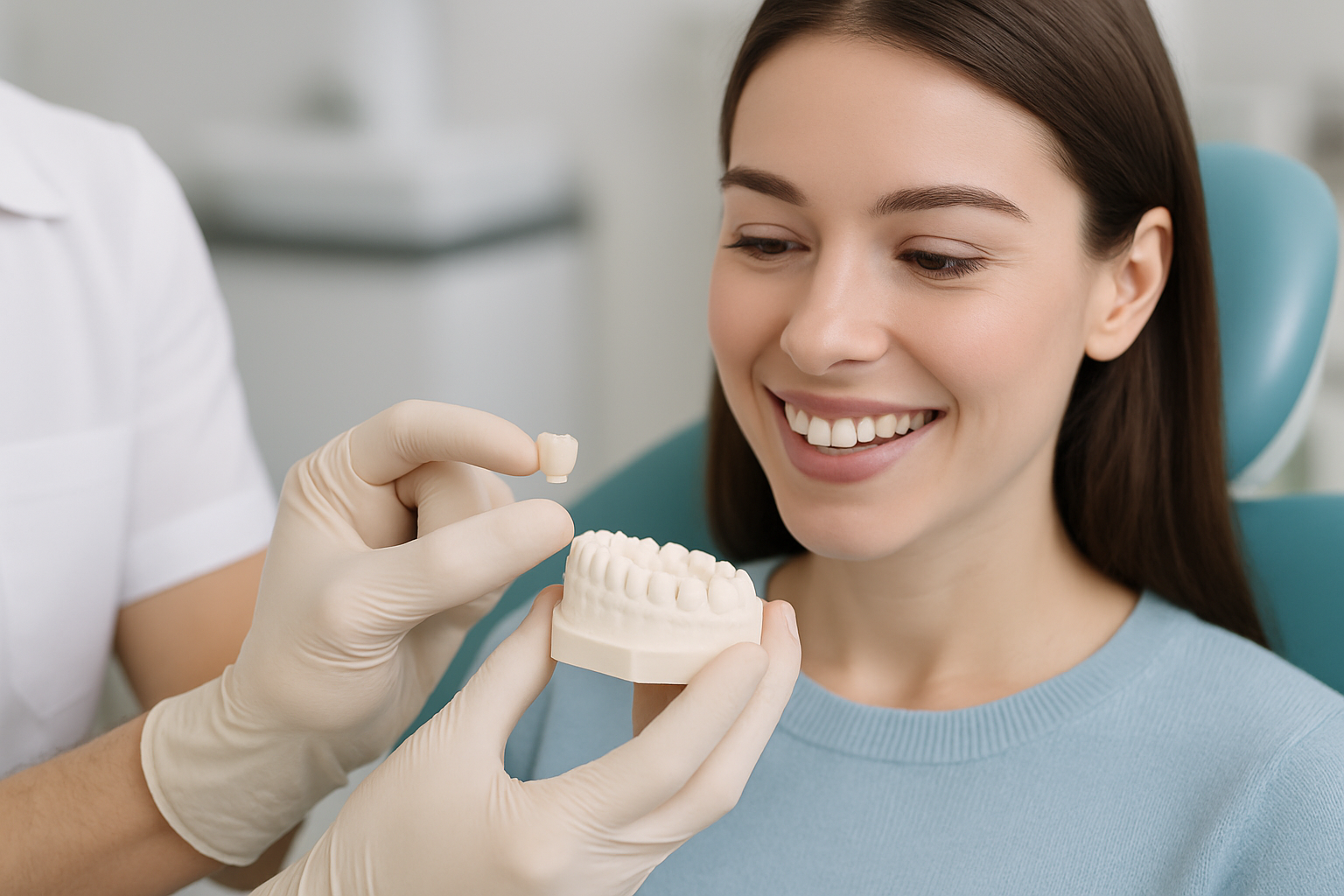
A dental crown is a custom-made cap that fits over a damaged, weakened, or heavily restored tooth. Think of it as a protective shell that restores the tooth’s shape, strength, and function while blending in with the rest of your smile. Crowns are one of the most versatile tools in restorative dentistry, used to strengthen teeth that can no longer be repaired with a simple filling.
At Switch Dental in Lower Hutt, crowns are just one part of a broader range of dental services designed to preserve your natural teeth wherever possible, while offering reliable solutions when a tooth needs more support.
Signs You Might Need a Dental Crown
Severe Tooth Decay
When decay has progressed too far to be treated with a standard filling, a crown may be the best way to save the tooth. As we explain in our approach to toothache relief, extensive decay can weaken the tooth structure to the point where extra support is needed to prevent further breakdown or infection.
A Broken or Fractured Tooth
A chipped or cracked tooth isn’t always just cosmetic. As we often see with a broken tooth, the crack you notice might be the visible sign of a bigger issue underneath, such as decay, an old filling giving way, or years of grinding and clenching. Teeth work as a team, so when one is compromised, neighbouring teeth can take on extra strain. A crown helps rebuild the tooth’s structure and spreads the bite load evenly again.
If your break happened as a result of an accident, it’s worth knowing that an ACC claim may be able to cover part of your treatment, even if the incident happened some time ago.
After Root Canal Treatment
Following root canal treatment, a tooth is often more brittle and prone to fracture, since it no longer has the same internal support it once did. A crown is commonly placed afterwards to protect the tooth and allow it to function normally again.
Supporting a Dental Implant
Crowns aren’t only used on natural teeth. When you receive a dental implant, a crown is fitted on top to recreate the visible part of the tooth. It’s the finishing piece that restores both appearance and chewing function once the implant foundation is in place.
Cosmetic and Structural Concerns
Sometimes a tooth is structurally sound but heavily worn, discoloured, or misshapen in a way that affects confidence or function. In these cases, a crown can improve both the look and strength of the tooth, working alongside other treatments like dental veneers or teeth whitening where appropriate.
Why Crowns Matter for Long-Term Oral Health
Delaying treatment on a weakened tooth can allow the problem to get worse. A crack can extend further, decay can spread, or a tooth may eventually become unrestorable, leading to the need for an extraction. Placing a crown at the right time is often what stands between saving a tooth and losing it altogether. It also helps protect neighbouring teeth from taking on uneven pressure, which can lead to further breakdown down the line.
The Dental Crown Process at Switch Dental
Understanding what’s involved can make the idea of getting a crown far less daunting. Here’s what the process generally looks like.
Step 1: Initial Assessment
Your dentist will examine the affected tooth, take any necessary X-rays, and discuss whether a crown is the right option compared to alternatives such as a filling, veneer, or in more advanced cases, an extraction. This is also the time to raise any questions or concerns you have about the process.
Step 2: Preparing the Tooth
The tooth is gently reshaped to make room for the crown. If decay or old fillings are present, these are removed first. Local anaesthetic is used to keep you comfortable throughout.
Step 3: Taking an Impression
Once the tooth is prepared, an impression is taken so the crown can be custom-made to fit precisely. Switch Dental uses digital scanning technology in many of our treatments, which allows for a more accurate and comfortable process compared to traditional moulds.
Step 4: A Temporary Crown
While your permanent crown is being made, a temporary crown is usually fitted to protect the tooth and keep things functioning normally in the meantime.</p