
Wisdom tooth removal is one of the most common oral surgery procedures, often necessary to prevent complications and maintain optimal oral health.
At Switch Dental in Lower Hutt, we provide professional wisdom tooth extraction services for patients across the Wellington region, using gentle techniques and advanced pain management to ensure your comfort throughout the procedure. Our experienced oral surgeons understand that wisdom tooth removal can be anxiety-provoking and take the time to explain the process, answer your questions, and provide personalised care that puts you at ease.
Discover how professional wisdom tooth removal can prevent future problems and improve your oral health.

Wisdom teeth, also known as third molars, are the last teeth to develop and emerge, typically appearing between ages 17-25. Due to evolutionary changes in human jaw size, most people no longer have adequate space for these teeth, leading to various problems that often necessitate removal to prevent serious complications.
Common reasons why wisdom tooth removal becomes necessary include:
Insufficient Space (Impaction): When there isn’t enough room in the jaw for wisdom teeth to emerge properly, they become impacted against adjacent teeth or remain trapped in the jawbone, causing pain, crowding, and potential damage to neighbouring teeth.
Difficult Oral Hygiene: Wisdom teeth located at the back of the mouth are extremely difficult to clean effectively, leading to increased risk of decay, gum disease, and bad breath that can affect your overall oral health and quality of life.
Crowding and Alignment Issues: Emerging wisdom teeth can push against existing teeth, potentially causing crowding, misalignment, and undoing previous orthodontic treatment, particularly affecting the front teeth where changes are most noticeable.
Decay and Gum Disease: The difficulty of cleaning wisdom teeth makes them highly susceptible to cavities and periodontal disease, which can spread to adjacent healthy teeth and require extensive treatment to resolve.
Cyst Formation: Impacted wisdom teeth can develop fluid-filled cysts around them, which gradually enlarge and destroy surrounding bone and tooth roots, potentially requiring complex surgical treatment if left untreated.
Damage to Adjacent Teeth: Impacted wisdom teeth can cause root resorption, decay, or gum disease in the second molars, potentially requiring expensive restorative treatment or even extraction of previously healthy teeth.
Recurrent Infections: Partially erupted wisdom teeth create pockets where bacteria accumulate, leading to repeated episodes of painful infection (pericoronitis) that can spread to involve the throat and neck.
Orthodontic Considerations: Many orthodontists recommend wisdom tooth removal before or during orthodontic treatment to prevent future crowding and maintain the results of teeth straightening procedures.
The consequences of delaying necessary wisdom tooth removal can include chronic pain, serious infections, damage to adjacent teeth, cyst formation, and the need for more complex surgical procedures as you age and healing becomes more challenging.
Switch Dental provides comprehensive wisdom tooth removal services, from simple extractions of fully erupted teeth to complex surgical removal of severely impacted teeth. Our approach emphasises patient comfort, safety, and optimal healing outcomes through careful planning and gentle surgical techniques.
Our wisdom tooth removal process includes:
- Comprehensive Pre-Surgical Assessment:
- Detailed clinical examination of wisdom tooth position and condition
- Digital X-rays or 3D cone beam imaging to assess impaction severity and surrounding structures
- Medical history review to identify any factors affecting surgery or healing
- Discussion of symptoms, concerns, and treatment goals
- Evaluation of adjacent teeth and overall oral health status
- Personalised Treatment Planning:
- Timing Considerations: Optimal timing for removal based on root development, patient age, and individual circumstances
- Complexity Assessment: Evaluation of surgical difficulty and estimated procedure time
- Anaesthesia Options: Selection of appropriate anaesthesia and sedation based on patient needs and procedure complexity
- Recovery Planning: Preparation for post-operative care and time off work or school
- Advanced Surgical Techniques:
- Simple Extractions: Gentle removal of fully erupted wisdom teeth using standard extraction instruments and techniques
- Surgical Extractions: Complex removal of impacted teeth requiring gum incision, bone removal, and tooth sectioning for safe extraction
- Minimally Invasive Approaches: Advanced techniques to minimise tissue trauma and reduce post-operative discomfort and swelling
- Piezoelectric Surgery: Ultrasonic instruments that selectively cut bone while preserving soft tissues and nerves
- Comprehensive Anaesthesia and Sedation:
- Local Anaesthesia: Effective numbing of the surgical area with long-acting anaesthetic agents
- Nitrous Oxide Sedation: Relaxing gas to reduce anxiety and enhance comfort during the procedure
- Oral Sedation: Medication taken before the appointment to promote relaxation and reduce memory of the procedure
- IV Sedation: Intravenous sedation for complex cases or highly anxious patients, providing deep relaxation while maintaining consciousness
- Post-Surgical Care and Recovery Support:
- Immediate Post-Operative Instructions: Detailed guidance for the first 24-48 hours after surgery to promote optimal healing
- Pain Management Protocols: Prescription medications and techniques to minimise discomfort during recovery
- Dietary Guidelines: Specific recommendations for foods and drinks during the healing period
- Activity Restrictions: Guidelines for work, exercise, and daily activities to prevent complications
- Follow-Up Care and Monitoring:
- Healing Assessment: Regular check-ups to monitor healing progress and identify any complications early
- Suture Removal: Removal of stitches when appropriate, typically 7-10 days after surgery
- Long-term Monitoring: Ongoing assessment to ensure complete healing and optimal outcomes
- Complication Management: Immediate treatment of any post-operative complications such as dry socket or infection
Extraction Complexity Levels:
- Simple: Fully erupted teeth requiring standard extraction techniques
- Moderate: Partially impacted teeth requiring minor gum incision
- Complex: Completely impacted teeth requiring bone removal and tooth sectioning
- Advanced: Difficult impactions near nerves or sinuses requiring specialist techniques
Our surgical team is experienced in all levels of wisdom tooth removal complexity and uses evidence-based techniques to ensure the safest, most comfortable experience possible.
At what age should wisdom teeth be removed?
The optimal time is typically late teens to early twenties when roots are not fully developed and healing is faster. However, wisdom teeth can be safely removed at any age when problems develop.
How long is the recovery period after wisdom tooth removal?
Most people return to normal activities within 3-5 days, with complete healing taking 1-2 weeks. Recovery time depends on the complexity of the extraction and individual healing factors.
Will I be able to eat normally after wisdom tooth removal?
You’ll need to stick to soft foods for the first few days, gradually returning to your normal diet as healing progresses. We provide detailed dietary guidelines to ensure proper nutrition during recovery.
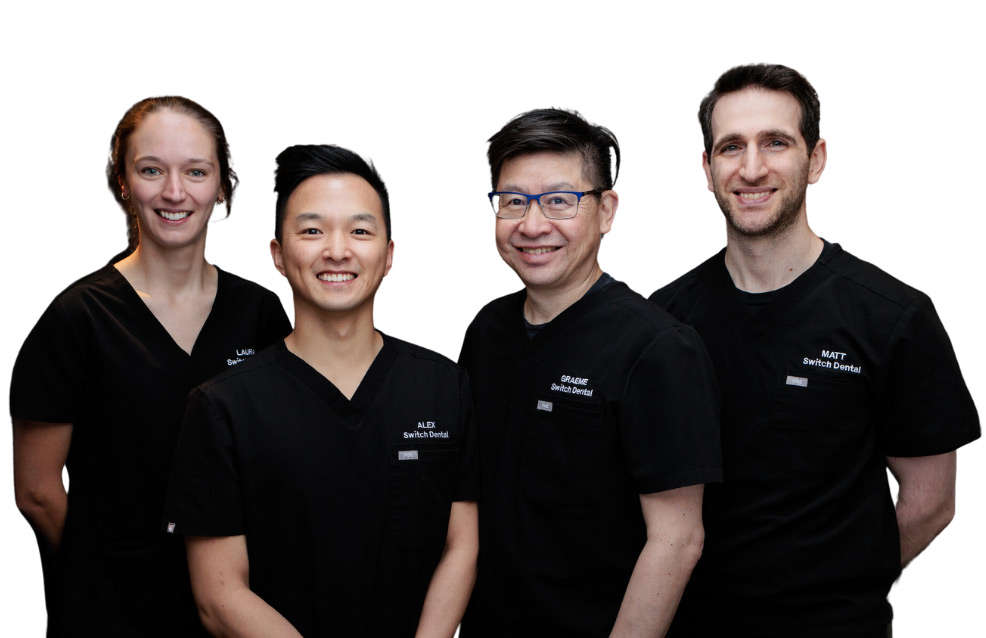
When you need wisdom tooth removal, choosing an experienced dental practice can make a significant difference in your comfort, safety, and recovery experience. At Switch Dental, we offer:
Experienced and gentle dentists
Thorough assessment and planning
Clear explanations and options
Focus on patient comfort
Comprehensive post-operative care instructions
Management of wisdom teeth