
Losing a tooth isn’t just about the gap you can see — it’s what happens beneath the surface that really matters. Just like removing a fence post from the ground, the space it leaves behind can weaken the whole structure. Teeth rely on each other for support and stability. When one goes missing, the neighbouring teeth often shift or tip into the space, the opposing tooth can over-erupt, and the bone underneath begins to shrink.
Dental implants are one of the most effective ways to restore both the look and function of a missing tooth — from the foundation up. At Switch Dental in Lower Hutt, we place and restore implants in-house using digitally guided surgery and state-of-the-art technology, so the process is as precise and comfortable as possible.

Before building a house, you’d survey the land — checking the soil, planning the layout, and ensuring the foundation will hold. We do the same with dental implants.
We assess your jaw using 3D CBCT scans to map bone density and shape. We also use the TRIOS scanner to take a clean digital impression of your bite — no messy moulds required. This lets us plan your implant placement digitally before the procedure even starts.
Once we’ve got a strong foundation, we place the implant fixture (a titanium post) into the jaw. After healing, we craft a custom crown to sit on top — like building a beautiful new house on solid land.
- Fixed in place — no clips or removing at night
- Doesn’t rely on other teeth like a bridge does
- Preserves bone and prevents facial collapse
- Stops other teeth from drifting or over-erupting
- Lets you chew confidently again
- Designed to last — with proper care and maintenance
1. Consultation & Planning
We review your medical history and examine the area using CBCT and TRIOS digital scans. Everything is carefully mapped before we begin.
2. Digital Guided Implant Surgery
Using your 3D scans, we plan the exact angle, depth, and position of your implant. The procedure is performed under local anaesthetic and is surprisingly straightforward for most patients.
3. Healing Period
The bone bonds with the implant over 3–6 months. This step is critical to long-term success.
4. Crown Design & Placement with CEREC Primescan
Once healed, we use our CEREC Primescan system to scan and design your final crown digitally. The crown is milled on-site, usually within a few hours, with no need for a temporary. You come back later that day for final placement.
We mainly use tooth-coloured ceramic crowns for their strength and natural look. For patients who grind their teeth or prefer traditional strength, alternatives are also available.
Is the implant procedure painful?
Most people find it easier than they expected. We use local anaesthetic and take our time to keep you comfortable.
Do I always need a bone graft?
Not always, but if your bone is thin or uneven, we may recommend one to ensure stability. We’ll explain your options clearly.
How durable are dental implants?
Dental implants are designed to be a long-term solution, and with the right care they can last for many years. Their longevity depends on factors like your oral hygiene, how well the bite is balanced, whether you grind your teeth, and your overall health. Just like a well-built house, regular maintenance is key to keeping it strong over time.
How do I clean around an implant?
Just like a natural tooth — brush, floss, and come in for regular check-ups. We’ll show you how to keep it clean and healthy.

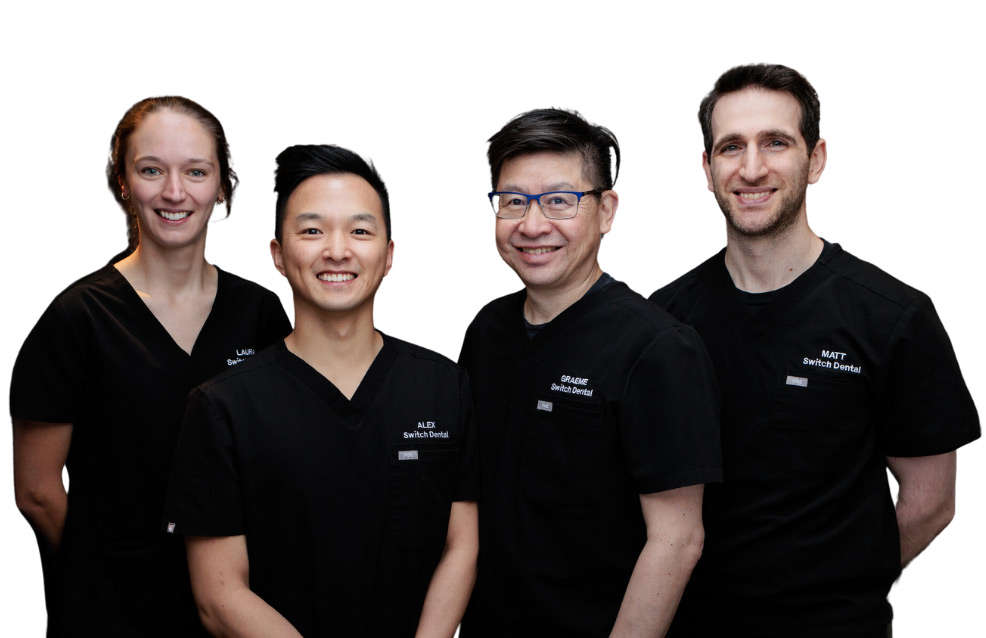
Why Switch Dental?
We combine clinical skill with leading technology to deliver high-quality, long-term outcomes.
- Digitally planned & guided — using CBCT and TRIOS scanners
- Same-day crowns with CEREC Primescan — no impressions
- In-house implant care — from planning to placement to restoration
- Clear, honest advice — no upselling, just what’s right for you
- Long-term focus — designed with your future dental health in mind
Need a bone graft? Learn about Bone Grafting & Socket Preservation →
Recently lost a tooth? Read about Tooth Extractions →