
While our primary goal at Switch Dental in Lower Hutt is always to preserve your natural teeth, there are situations where a tooth extraction (removal) becomes the most appropriate or necessary course of action for your overall oral health. Our experienced Wellington dentists perform tooth extractions, including simple removals, surgical extractions, and wisdom tooth procedures, with a focus on your comfort and a gentle approach. We understand that the thought of an extraction can be daunting, and we are here to ensure the process is as stress-free and comfortable as possible.

Several dental conditions or circumstances can lead to the need for a tooth extraction. While we explore all viable options to save a tooth, removal may be recommended in the following situations:
Severe Tooth Decay: If a tooth is so extensively decayed that it cannot be restored with a filling, crown, or root canal treatment, extraction may be the only option to prevent the spread of infection and alleviate pain.
Advanced Gum Disease (Periodontitis): Severe gum disease can destroy the bone and ligaments that support teeth. If a tooth becomes very loose due to significant bone loss, it may not be salvageable and could require extraction.
Impacted Wisdom Teeth: Wisdom teeth (third molars) often don’t have enough space to erupt properly and can become impacted (trapped beneath the gum or bone). Impacted wisdom teeth can cause pain, infection, damage to adjacent teeth, or cysts, often necessitating their removal.
Irreparable Tooth Fracture: A tooth that is severely cracked or fractured, especially if the fracture extends below the gum line or into the root, may be impossible to repair effectively.
Orthodontic Reasons (Ortho Extractions): In some cases, to relieve severe crowding and allow for successful orthodontic treatment (e.g., with braces or Invisalign), one or more teeth may need to be extracted to create the necessary space for proper alignment.
Preparation for Dentures or Other Prosthetics: Some teeth may need to be removed to allow for the successful fitting and function of a partial or full denture, or other dental prosthetics.
Failed Root Canal Treatment: Although root canal treatment has a high success rate, if a previously treated tooth becomes re-infected and further endodontic treatment is not viable, extraction might be considered.
Severe Infection or Abscess: If a dental infection is widespread and does not respond to other treatments, extracting the affected tooth may be necessary to resolve the infection and protect your overall health.
Your dentist at Switch Dental will always conduct a thorough examination, including X-rays, and discuss all findings and alternative treatment options with you before recommending an extraction.
At Switch Dental, we prioritise your comfort and safety during any tooth extraction procedure. Our dentists are experienced in performing extractions gently and efficiently.
The Tooth Extraction Procedure typically involves:
- Consultation and X-rays: Your dentist will assess the tooth, review your medical history, and take X-rays to understand the tooth’s position, root structure, and the condition of the surrounding bone.
- Local Anaesthesia: The tooth and the surrounding gum tissue will be completely numbed using local anaesthetic. You will not feel pain during the extraction, though you may be aware of some pressure.
- The Extraction Process:
- Simple Extraction: For a tooth that is visible above the gum line and has relatively straightforward roots, your dentist will use specialised instruments called elevators and forceps. The elevator is used to gently loosen the tooth from its socket, and then forceps are used to carefully remove the tooth.
- Surgical Extraction: This is required if a tooth is broken off at the gum line, has not fully erupted (like an impacted wisdom tooth), or has complex root structures. A surgical extraction may involve making a small incision in the gum to access the tooth. In some cases, the tooth may need to be sectioned (cut into smaller pieces) for easier removal, or a small amount of bone around the tooth may need to be removed. Stitches may be placed afterwards to help the gum heal.
- Controlling Bleeding and Post-Operative Care: After the tooth is removed, a sterile gauze pad will be placed over the extraction site, and you will be asked to bite down firmly to help control bleeding and promote clot formation. Your dentist will provide you with detailed post-operative instructions on how to care for the extraction site, manage any discomfort, and promote healing.
Wisdom Tooth Extractions:
Wisdom teeth often require surgical extraction due to their position and potential for impaction. Our dentists are experienced in assessing and removing wisdom teeth. For very complex cases, we may refer you to an oral surgeon.
We understand that extractions can cause anxiety, and we offer a supportive environment. If you are particularly anxious, please discuss this with us, as we can explore options to help you feel more relaxed
Is tooth extraction painful?
The area will be completely numbed with local anaesthetic, so you should not feel pain during the procedure. You may feel some pressure. Some soreness or discomfort is normal after the anaesthetic wears off, but this can usually be managed with over-the-counter pain relief.
How long does it take to recover from a tooth extraction?
Initial healing of the gum tissue usually takes 1-2 weeks. Complete healing of the bone can take several months. Your dentist will provide specific recovery guidelines.
What can I eat after a tooth extraction?
Stick to soft foods for the first few days (e.g., soup, yoghurt, mashed potatoes). Avoid chewing on the extraction site and refrain from using straws, as this can dislodge the blood clot.

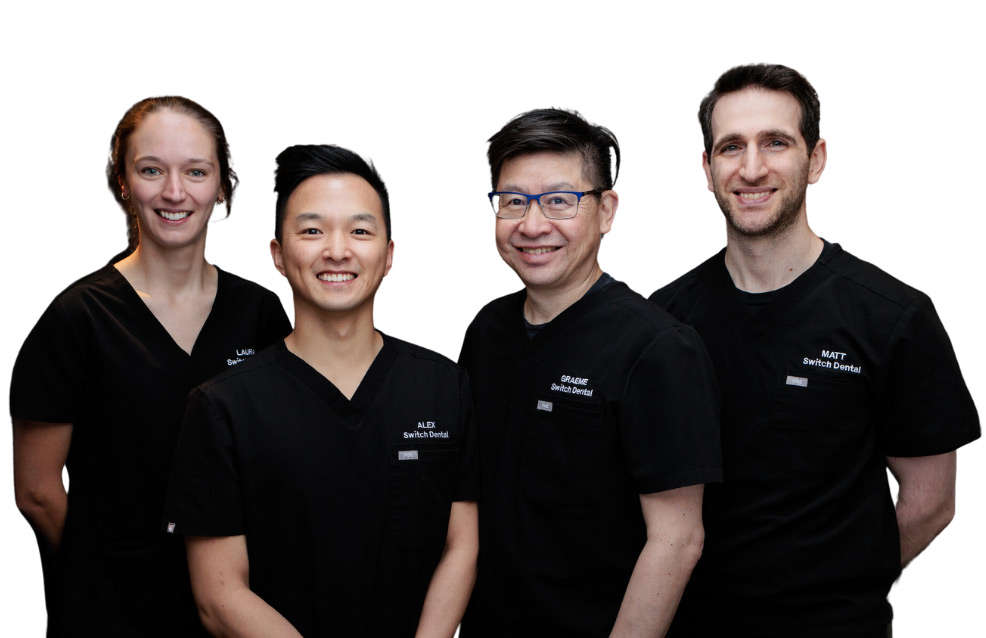
When an extraction is necessary, you can trust Switch Dental for:
Experienced and gentle dentists
Thorough assessment and planning
Clear explanations and options
Focus on patient comfort
Comprehensive post-operative care instructions
Management of wisdom teeth