
Losing a tooth doesn’t just leave a gap in your smile — it sets off a natural process called bone resorption. Over time, the jawbone that once supported that tooth begins to shrink. That’s where bone grafting comes in — a subtle but important procedure to maintain your jaw structure and keep future options open.
At Switch Dental in Lower Hutt, we offer bone grafting as part of a long-term, proactive approach to dental care. Whether you’re planning an implant, stabilising a denture, or simply wanting to avoid changes to your facial structure, we’ll talk you through your options and help you make an informed decision.

We often explain it like laying foundations before building a house, or putting in retaining walls before landscaping — you want solid ground before constructing anything important.
You might need bone grafting if:
- You’re removing a tooth and want to maintain jaw shape
- You’re planning for a dental implant
- You’ve had bone loss from gum disease or long-term missing teeth
- You wear dentures and need better support
- You’re considering a bridge and want to prevent gum or bone collapse
In many cases, the ideal time for a graft is immediately after a tooth extraction — a process called socket preservation. It’s one of the most underappreciated procedures in dentistry, and we’ll talk about it with you during your extraction consult.
A graft involves placing a small amount of bone-like material into the area where bone is thinning or missing. It acts as a scaffold, helping your body regrow natural bone over time.
We use digital X-rays or CBCT imaging (when needed) to plan the graft precisely and ensure everything heals predictably.
Graft materials may be synthetic, animal-based, or human-derived — we’ll explain the pros and cons of each and always ask for your informed consent.
We typically do bone grafts:
- At the time of extraction, especially in visible areas or where an implant might be placed later
- Before implant placement, if there isn’t quite enough bone
- To rebuild bone lost over time, especially if a tooth’s been missing for years
Most procedures are done under local anaesthetic and feel similar to a routine extraction.
Bone grafts usually need 3–6 months to fully integrate, depending on the location and material used. After healing, we’ll reassess your bone levels and decide whether to move ahead with your planned treatment — or simply leave the site healthy and preserved for the future.
It might feel like an “extra” step, but a bone graft often prevents bigger issues later. It can:
- Help maintain facial shape and bone structure
- Reduce the chance of gum collapse or shrinkage
- Make dentures or bridges fit more securely
- Improve the long-term success of implants
- Keep more future treatment options available
Even if you’re not sure what your next step is, grafting helps you preserve flexibility.
Is bone grafting painful?
No — we use local anaesthetic, and most people say it feels no different to a standard extraction. Some mild soreness afterwards is normal and easily managed.
How long does a bone graft take to heal?
Usually 3–6 months depending on the site and graft material.
Do I need a graft with every extraction?
Not always. We’ll talk to you about your specific case and whether bone preservation is recommended.
What if I’m not sure if I want an implant yet?
That’s actually a great time to consider grafting — it keeps the door open, even if you’re not ready to decide just yet.

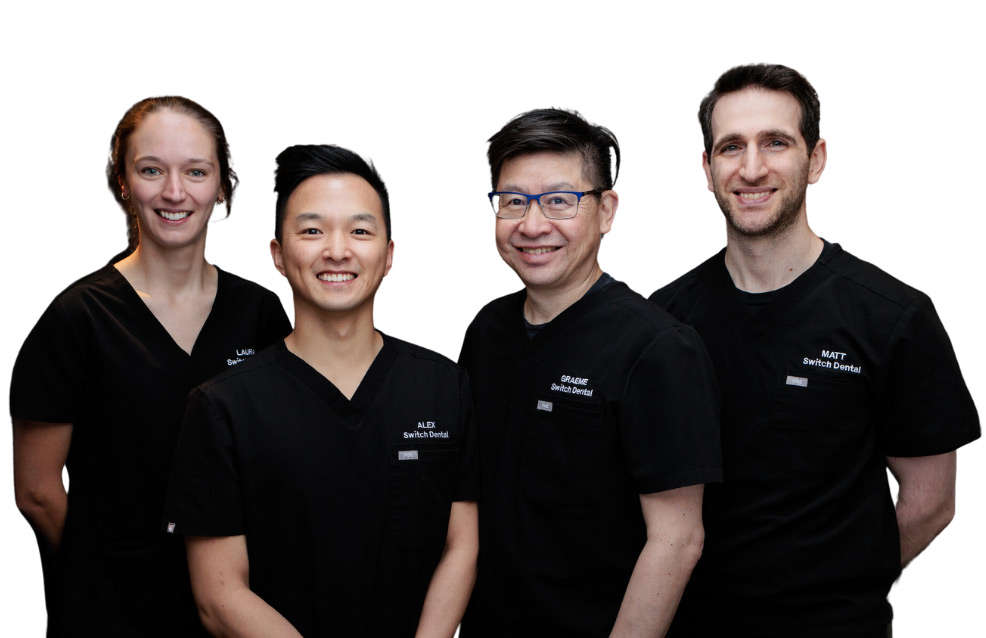
Why Switch Dental?
At Switch, we don’t just fix teeth — we think ahead.
Long-term thinking
Modern tools
Clear conversations
Aligned with your goals